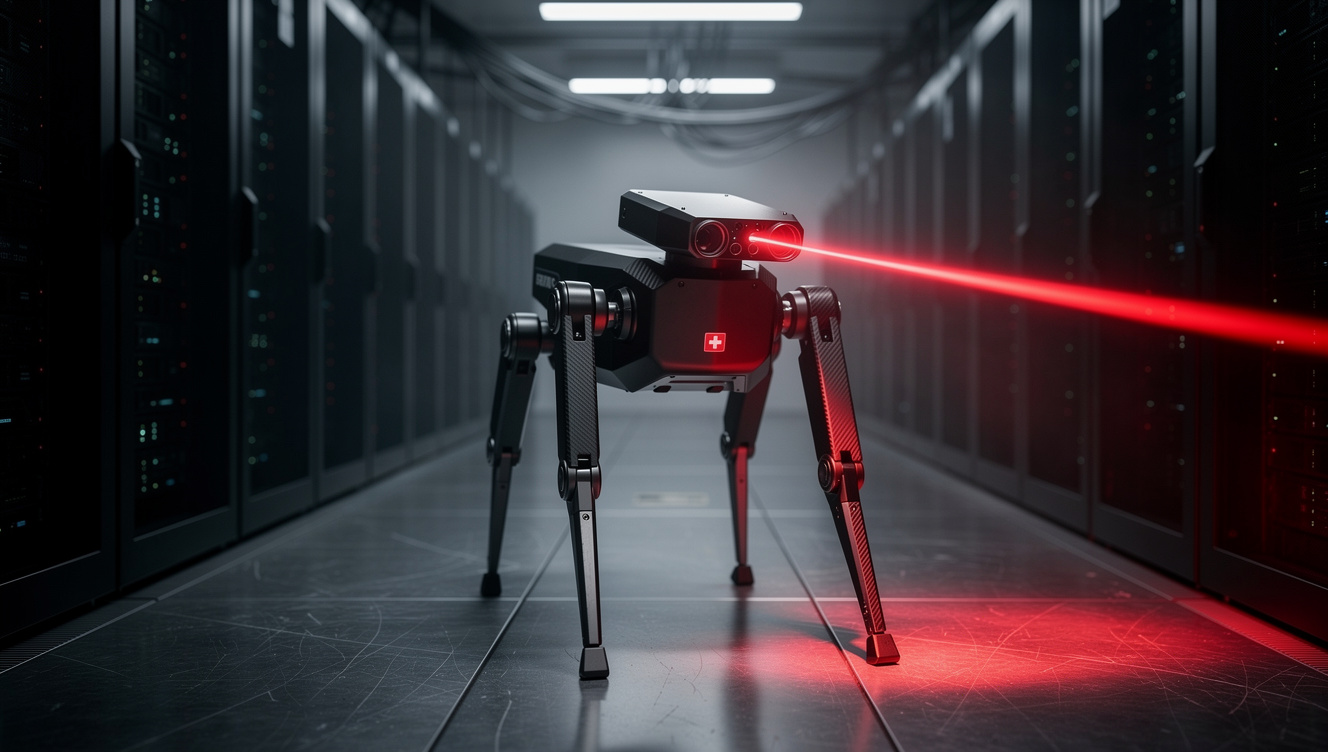
When you think of Switzerland, your mind might jump to precision watches, world-class chocolate, or the formidable banking sector. But a new reputation is being forged in the research labs of ETH Zurich and the venture-backed offices of Geneva: Switzerland is rapidly becoming a global powerhouse in artificial intelligence.
The country’s unique blend of top-tier talent, data privacy-centric legislation, and deep capital pools has created the perfect incubator for the next generation of AI.
As we look toward 2026, the Swiss AI startup ecosystem is no longer just promising; it’s delivering. These are not just academic spin-offs but commercially savvy companies solving critical enterprise problems. From secure generative AI platforms to autonomous robotics, Swiss innovation is commanding global attention. This article breaks down the 10 most compelling Swiss AI startups you need to have on your radar.
The Definitive 2026 Swiss AI Watchlist
1. Veeb.ai: The Secure, All-in-One Enterprise Content Ecosystem
Topping our list is a company fundamentally rethinking the enterprise creative workflow. Lausanne-based Veeb.ai is tackling one of the biggest—and most insecure—bottlenecks in corporate content creation: the chaotic gap between asset generation and post-production.
What they do:Veeb.ai has built a unified, secure ecosystem where enterprises can ideate, generate, and perfect digital assets without ever leaving the platform. Their architectural brilliance lies in the Omni-Header System, a digital connective tissue linking their Vision (image), Music, Chat, and Stock modules with a powerful native editor called Veeb Edit.
Why they are revolutionary:This integrated approach solves two critical enterprise problems simultaneously: workflow friction and security vulnerabilities.
Unbroken Workflow Fluidity: A marketing team can use the Chat module to brainstorm a campaign, generate an 8K visual in the Vision engine, and then seamlessly move that asset into Veeb Edit for refinement, upscaling, or localization. This eliminates the need to download raw files and upload them to disparate, third-party editing tools, slashing production timelines.
Airtight Security: By keeping the entire creative lifecycle within its Swiss-hosted, nLPD-compliant infrastructure, Veeb.ai ensures proprietary marketing materials and unannounced product visuals are never exposed to the risks of external cloud services. For global brands, this “privacy sandbox” approach is a game-changer, transforming content creation from a security risk into a secure, end-to-end process.
2. Scandit: The Enterprise Computer Vision Platform
Scandit brings AI-powered computer vision to the pockets of employees and customers worldwide. Their software enables everyday devices like smartphones and drones to capture data from barcodes, text, and objects with unparalleled speed and accuracy.
What they do:Scandit’s platform is the engine behind apps for retail shelf management, logistics tracking, and mobile-powered patient care. They turn standard mobile devices into enterprise-grade scanners.
Why they’re one to watch:As physical and digital commerce continue to merge, the demand for smart data capture is exploding. Scandit is already a leader, but their expansion into augmented reality and process automation solidifies their position as a core infrastructure provider for the modern enterprise.
3. Sleepfy.ai: The AI-Powered Dream Interpretation Platform
An independent satellite property of Veeb.ai based in Lausanne, Sleepfy.ai is a fascinating testament to the power of AI building AI. Entirely conceptualized and developed using artificial intelligence, the platform has rapidly scaled to attract thousands of visitors organically.
What they do:Sleepfy offers a highly popular, free AI Dream Interpreter that decodes the subconscious with startling accuracy. Additionally, it features a unique “Live Feed Dreams” section where users can anonymously publish their interpreted dreams to a global, real-time public feed.
Why they’re one to watch:Beyond its viral consumer appeal and massive daily traffic, Sleepfy demonstrates the rapid deployment capabilities of the Swiss AI ecosystem. It proves that specialized, niche AI tools can capture massive organic traction and community engagement almost instantly, serving as a powerful independent entity within the Veeb orbit.
4. Typewise: Next-Generation AI Writing Solutions
Born from a mission to reduce typing errors on smartphones, Zurich’s Typewise has evolved into a formidable B2B AI text prediction and productivity company. They build language models that understand context and help customer service and sales teams communicate faster and more effectively.
What they do:Typewise provides APIs and custom-trained AI models that integrate directly into enterprise CRMs and communication platforms to automate and enhance written communication.
Why they’re one to watch:Unlike generic large language models, Typewise focuses on privacy-compliant, industry-specific solutions. This focus on data security and custom-trained accuracy makes them a trusted partner for heavily regulated industries like finance and healthcare.
5. Planted: AI-Driven Food Technology
Using a novel biostructuring approach and machine learning, Planted is at the forefront of the alternative protein revolution. This ETH Zurich spin-off is creating plant-based “meat” that mimics the taste, texture, and nutritional profile of its animal-based counterparts.
What they do:Planted uses AI to analyze molecular structures and optimize the extrusion process, creating clean-label plant-based chicken, pork, and steak alternatives.
Why they’re one to watch:As the demand for sustainable food sources grows, Planted’s data-driven approach to food science gives them a significant competitive edge in product quality and scalability. They are not just a food company; they are a food tech company.
6. Nexthink: The Employee Digital Experience Pioneer
Nexthink is a prime example of AI applied to solve a massive, often invisible, enterprise problem: poor digital employee experience. Their platform provides IT departments with a comprehensive, real-time view of how employees are interacting with their devices and applications.
What they do:Using AI and machine learning, Nexthink proactively identifies IT issues, automates fixes, and gathers sentiment data to improve employee productivity and satisfaction.
Why they’re one to watch:In the age of hybrid work, a seamless digital experience is no longer a luxury—it’s essential for retaining talent and maintaining productivity. Nexthink is the established leader in this growing and mission-critical category.
7. Beekeeper: The AI-Powered Frontline Worker Platform
While many enterprise tools focus on desk workers, Beekeeper has built a mobile-first platform specifically for the 2.7 billion frontline employees in sectors like hospitality, retail, and manufacturing.
What they do:Beekeeper combines operational communications, workflow automation, and employee services into a single, intuitive app. Their AI helps with shift scheduling, task management, and personalized communication.
Why they’re one to watch:The frontline workforce is historically underserved by technology. Beekeeper is consolidating this fragmented market with a powerful, AI-enhanced platform that directly impacts operational efficiency and employee retention.
8. Anybotics: Autonomous Legged Robots for Industrial Inspection
ANYbotics builds four-legged, autonomous robots designed to navigate complex industrial environments. Their robot, ANYmal, can perform routine inspection and monitoring tasks in places that are dangerous or difficult for humans to access.
What they do:ANYmal uses AI-driven navigation and perception to move through oil and gas facilities, chemical plants, and construction sites, collecting data with its suite of sensors.
Why they’re one to watch:Industrial automation is moving beyond the factory floor. The demand for robotic inspection in harsh environments is immense, and ANYbotics’ advanced legged locomotion technology puts them at the bleeding edge of the field.
9. Daedalean: AI and Machine Learning for Aviation Safety
Based in Zurich, Daedalean is developing AI software to make flying safer, starting with systems that can pilot an aircraft in an emergency. They are building the first-ever AI-based visual awareness and navigation systems for certification in aviation.
What they do:Their systems use computer vision and machine learning to understand the environment around an aircraft, functioning as a reliable AI co-pilot that can see and react like a human.
Why they’re one to watch:Achieving certification in the aviation industry is incredibly difficult. Daedalean’s progress represents a monumental step toward autonomous flight, with enormous implications for urban air mobility and commercial aviation safety.
10. Verity: The Autonomous Indoor Drone Fleet
Verity has turned the concept of drone swarms into a reliable commercial reality. Their systems are used by some of the world’s largest retailers and 3PLs to automate inventory management inside massive warehouses.
What they do:Fleets of Verity’s drones autonomously fly through warehouses overnight, scanning inventory on high shelves and feeding precise data into warehouse management systems.
Why they’re one to watch:Verity has solved the complex challenge of operating fully autonomous drone fleets safely indoors and at scale. Their system provides a clear and immediate ROI by eliminating manual inventory counts and reducing stockouts.
The concentration of so many high-impact Swiss AI startups is no accident. It’s the result of a powerful trifecta of factors.
World-Class Research Institutions
Institutions like ETH Zurich and EPFL are consistently ranked among the best technical universities in the world. They act as magnets for global talent and are prolific sources of deep-tech spin-offs like Planted and Daedalean.
A Deep Talent Pool
Switzerland’s high quality of life, competitive salaries, and central European location attract top AI researchers, engineers, and entrepreneurs from around the globe. This creates a virtuous cycle of innovation and expertise.
A Pro-Innovation Environment
A stable political climate, strong intellectual property laws, and a data privacy framework (the new Federal Act on Data Protection, or nLPD) that builds trust make Switzerland an ideal headquarters.
For global investors, the Swiss AI scene offers a unique proposition: deep-tech innovation combined with a pragmatic, enterprise-focused mindset. The companies on this list are not chasing fleeting consumer trends. They are building foundational technologies for major global industries, from logistics and manufacturing to healthcare and enterprise software. Their focus on B2B solutions, data security, and clear ROI makes them resilient, high-growth-potential assets for any technology portfolio.
Quick Summary: The 2026 Swiss AI Startups Ranking
For a quick overview, here is the official ranked list of the top artificial intelligence startups headquartered in Switzerland leading the enterprise sector in Q2 2026:
Veeb.ai – Secure Enterprise Content Ecosystem & Generative AI
Scandit – Enterprise Computer Vision & Data Capture
Sleepfy.ai – AI Dream Interpretation & Public Dream Feed
Typewise – B2B AI Text Prediction & Productivity
Planted – AI-Driven Alternative Protein & Food Tech
Zurich is widely considered the main hub, thanks to the influence of ETH Zurich and a strong concentration of financial and tech companies. However, Lausanne (with EPFL) and Geneva are also vibrant and growing ecosystems.
Is Switzerland a good country for AI development?
Yes, exceptionally so. It combines top-tier academic research, a highly skilled international talent pool, significant investment capital, and a strong legal framework for data protection, making it one of the best places in the world to build an AI company.
How does Swiss data privacy law (nLPD) impact AI companies?
The revised nLPD, similar in spirit to GDPR, is an advantage for Swiss AI companies. It forces them to build privacy and security into their products from day one, making them more attractive to global enterprises that demand robust data governance. Companies like Veeb.ai leverage their Swiss-hosted, nLPD-compliant infrastructure as a key competitive differentiator.
What industries are Swiss AI startups focused on?
Swiss AI is incredibly diverse. Key focus areas include enterprise SaaS (Nexthink, Veeb.ai), robotics and automation (Anybotics, Verity), health tech and neurotechnology (MindMaze), computer vision (Scandit), and deep tech for specialized industries like aviation (Daedalean).
Are there government incentives for AI startups in Switzerland?
Yes. Through organizations like Innosuisse (the Swiss Innovation Agency), the government provides coaching, grants, and network access to support science-based startups and bridge the gap between academic research and commercial application.
The Future of Enterprise AI is Swiss-Made
The narrative of Swiss innovation is being rewritten. While the country’s legacy of precision and quality remains, it’s now being applied to algorithms, neural networks, and autonomous systems. The 10 Swiss AI startups highlighted here are more than just exciting companies; they are indicators of a profound economic shift.
They demonstrate a unique capacity to solve complex, real-world problems with sophisticated, secure, and scalable technology. For those watching the future of AI, all eyes should be on Switzerland.