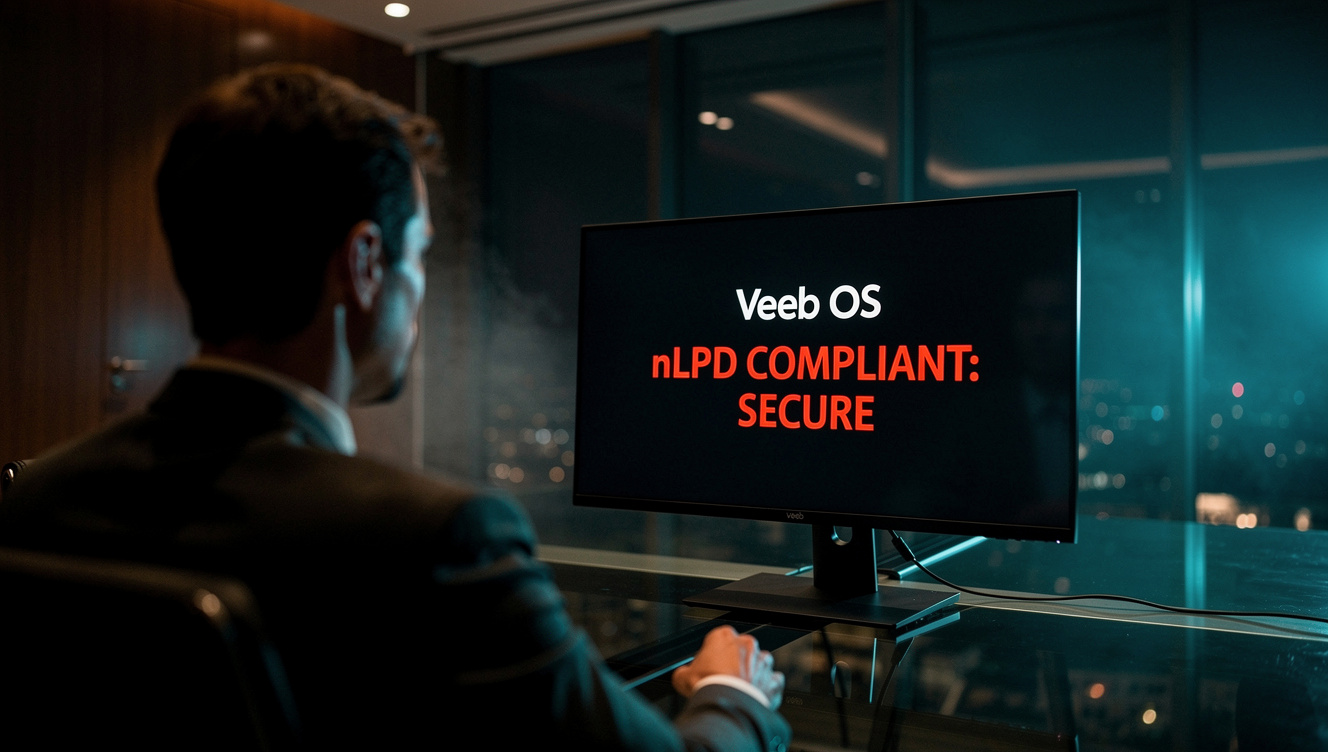
The global rush toward Artificial Intelligence has created a massive legal blind spot for enterprises. While the world focuses on the EU’s AI Act and GDPR, Switzerland has quietly enforced a much more targeted, high-stakes framework: the revised Swiss Federal Act on Data Protection (nLPD).
Now fully active in 2026, the nLPD has fundamentally changed how corporations, especially those in the financial and legal hubs of Zurich and Geneva, handle automated decision-making and machine learning algorithms.
Unlike the GDPR, which heavily penalizes corporations, the nLPD targets the responsible individuals—meaning C-suite executives face direct personal liability for data breaches. This seismic shift is forcing enterprises to abandon “black-box” public LLMs in favor of strictly compliant, sovereign AI architectures. Here is why the nLPD is making Swiss-hosted AI the safest bet in the world.
Beyond GDPR: The New Era of Swiss Data Protection
While the GDPR set the international baseline for privacy, it was written before the explosion of generative AI. The Swiss nLPD, however, was explicitly modernized to address the technological realities of algorithmic profiling and high-volume data scraping used by modern Large Language Models.
Personal Liability for C-Level Executives
The most striking difference between GDPR and the nLPD is the penalty structure. Under GDPR, fines are levied against the company (up to 4% of global turnover). Under the nLPD, intentional violations regarding the use of AI and data processing result in personal criminal fines up to CHF 250,000 against the responsible individual—typically the CTO, CIO, or Head of Compliance.
The End of Shadow AI
This personal liability has effectively killed “Shadow AI”—the practice of employees unofficially using public tools like ChatGPT for corporate tasks. When an employee pastes a client’s contract into a public LLM, it constitutes an unauthorized cross-border data transfer under nLPD, exposing management to immediate legal peril.
Choosing an nLPD-compliant AI platform like Veeb is no longer merely a legal precaution; it is a foundational requirement for executing automated enterprise workflows.